
Microplastic Madness
An award-winning documentary that's inspiring a global youth movement

November 2025
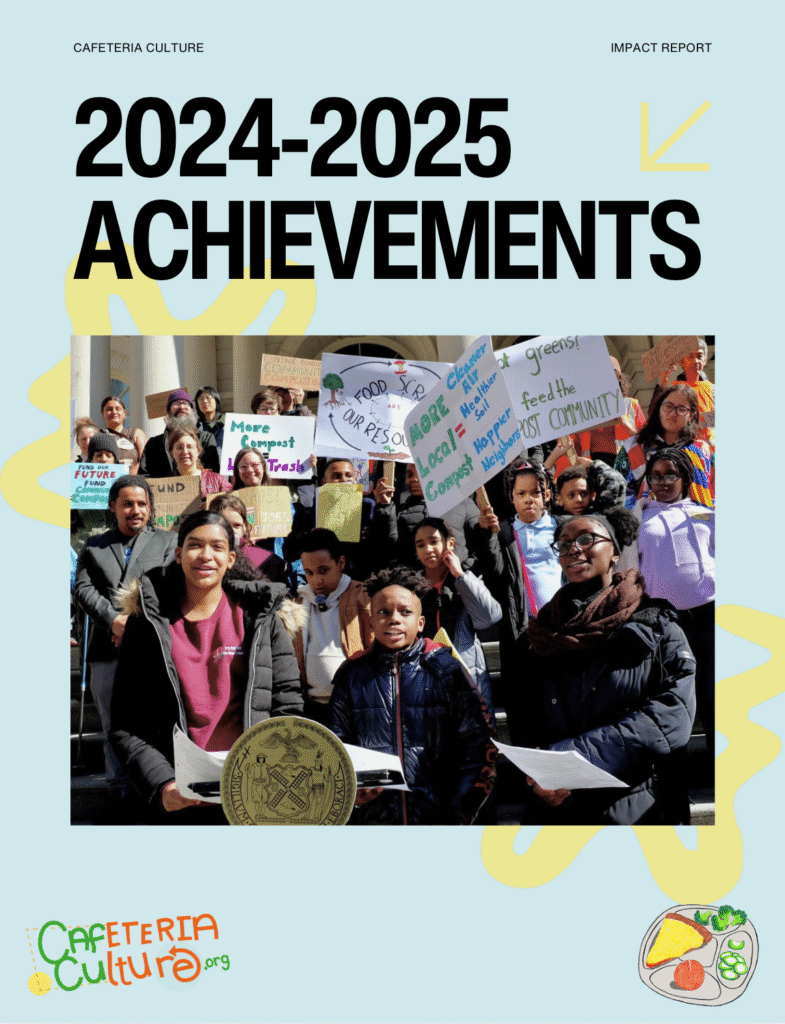
The 2024-2025 school year has been one of incredible growth and momentum for Cafeteria Culture. Together with students, teachers, families, and community partners, we pushed forward with bold, creative solutions to reduce waste and reimagine school cafeterias as places of student agency and climate action.
At 5 NYC Title I Public Schools, students reduced cafeteria food waste by 35–50% through our Mindful Choice Meals initiative, and for the first time, we composted cafeteria scraps locally – right at schools or nearby community sites. This model challenges NYC’s industrial system of trucking organics and shows how local composting can strengthen communities. We also started edible gardens in two of our partner schools, where students grow, taste, and share fresh food, linking waste reduction, composting, and food production into a sustainable school food system.
Our Plastic Free Lunch Day campaign, created by Cafeteria Culture students, has now reached 4,103 schools nationwide, eliminating more than 30 million single-use plastics. We also trained 841 NYC teachers to run student-led waste audits, extending our impact citywide.
These wins reflect the creativity and leadership of youth from historically marginalized communities, proving that when students are given the tools and a platform, they drive change across NYC and beyond. Looking ahead, we will scale Mindful Choice Meals, refine best practices for school-to-community composting, expand edible gardens, and continue to bring student voices into the policy arena.
Thank you for being part of this journey. I am honored to continue the bold journey that Debby Lee Cohen and I started together 16 years ago. Your support fuels real climate solutions led by students, and together we’re proving that change starts with youth in the cafeteria.
With gratitude,
Atsuko Quirk
Executive Director, Cafeteria Culture
Reducing Food Waste Through Choice and Communication
Cafeteria Culture’s Mindful Choice Meals (MCM) program was designed in response to our finding that 45–80% of cafeteria food waste was discarded untouched. During the 2024–2025 school year, at five NYC Public Schools, we helped students educate peers and adults about the USDA’s Offer vs. Serve food choice guidelines and improved menu communication, allowing students to actively choose what they wanted to eat rather than receiving pre-plated meals. As a result, food waste was reduced by 35-50%, food consumption increased by 15-40%, and school lunch participation rose by 12%.
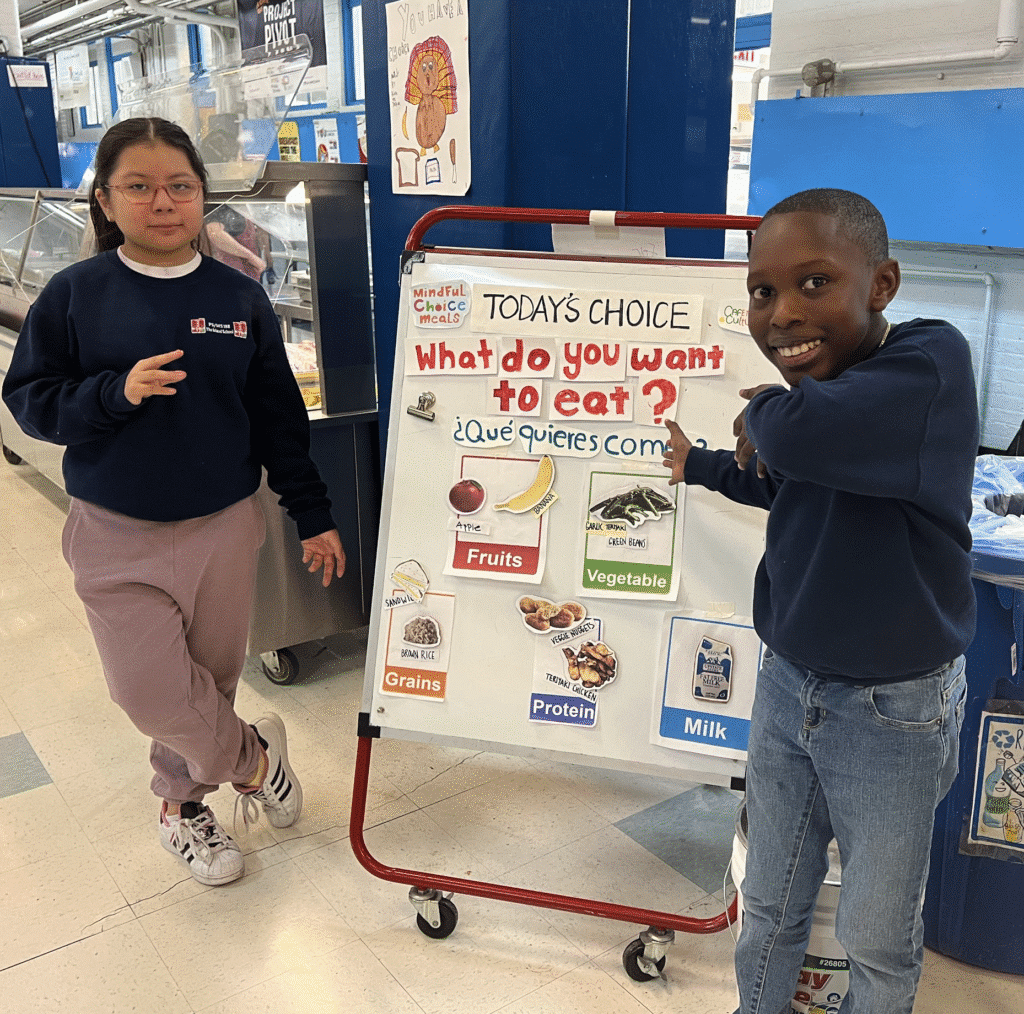
Mindful Choice Meals menu board detailing the day’s lunch options at the serving line at PS/MS 188.
Composting Cafeteria Food Scraps Locally
Cafeteria Culture advanced local composting of cafeteria food scraps through partnerships with Compost Power and other local community composting sites, including Polo Grounds and Red Hook Farms, and brought in-school compost tumblers to two partner schools. Our students turned 161 pounds of cafeteria food scraps into a local resource rather than trucking them to distant facilities, reducing emissions and engaging students in real-world climate solutions that build soil and community resilience. Next, we aim to make this a routine and identify best practices for scaling this model citywide. We have now begun weekly food scrap processing at PS/MS 46, partnering with Polo Grounds site, creating a model toward a school-based composting system.
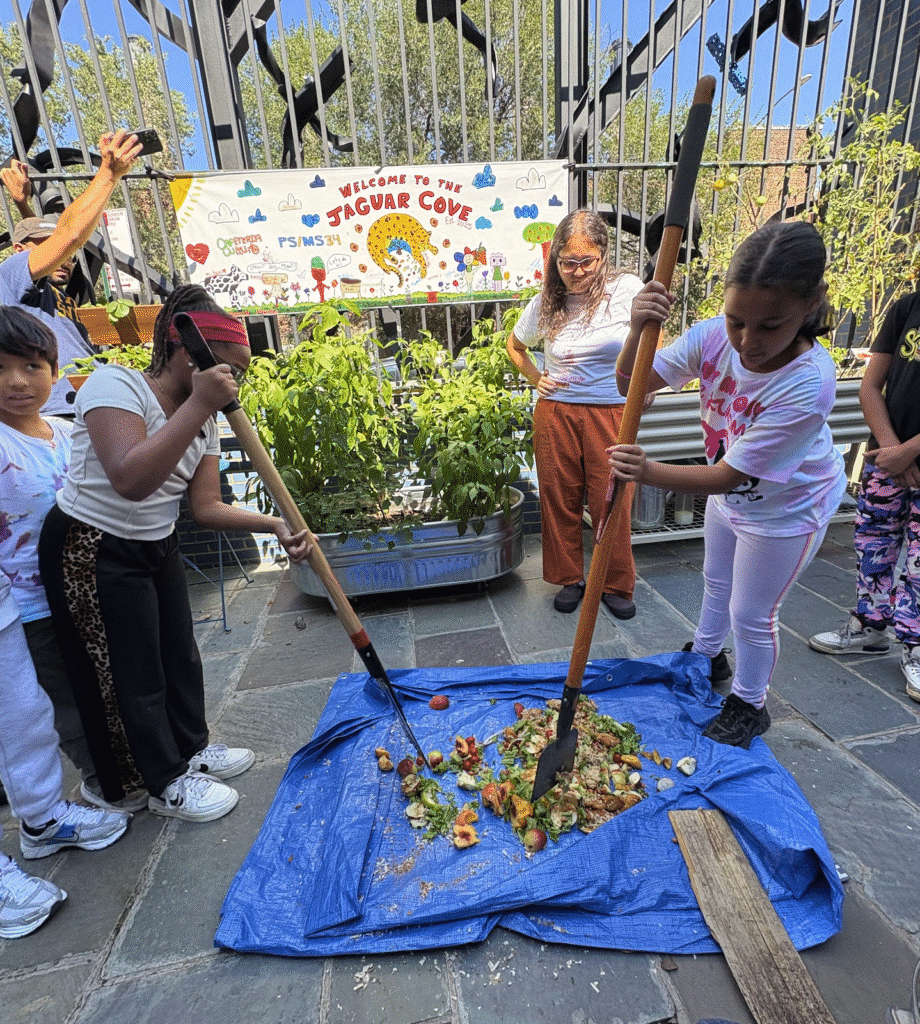
PS/MS 34 students chopping cafeteria food scraps to put in their compost tumbler at their newly created edible garden.
Lasting Impact Beyond Plastic Free Lunch Day in NYC
Our Plastic Free Lunch Day (PFLD) campaigns have transformed daily cafeteria service beyond one-day events. The average number of single-use plastic items served in NYC Public School cafeterias on regular school days (not on PFLDs) is down from 5.7 in 2022 to just 1.8 in 2025.* This shift, based on data from regular kitchen-serving cafeterias, reflects a sustained, system-wide change in daily operations. Our modest estimate shows that this reduction prevents over one million single-use plastic items from being served each school day across NYC Public Schools compared to three years ago.
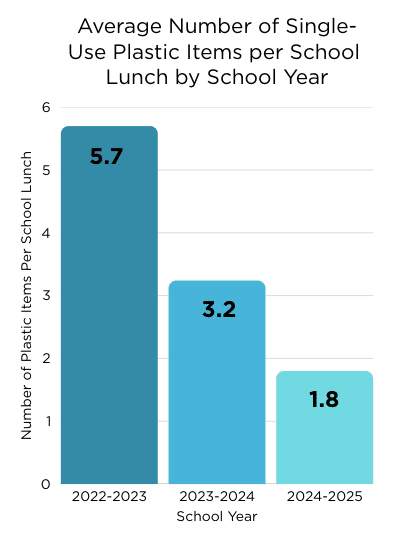
Looking ahead, we are excited to take on bigger challenges. We are expanding local composting models in public schools, creating school gardens, running meticulous waste audits, and elevating student-led climate action through our national Plastic Free Lunch Day campaign. We are also building new toolkits, growing our team, and deepening our capacity to create lasting systemic change from the cafeteria up.
Thank you for helping us build something powerful and enduring. If you would like to make a donation, you can donate at this link.
Cafeteria Culture Team
October 2024
Cafeteria Culture’s School Cafeteria Waste Reduction Interventions for Sustainable School Food Service project at PS 15 Patrick F. Daly Magnet School of the Arts showcases how student-led initiatives can drive real world impact. From January 2022 to December 2023, we implemented innovative interventions, guided by waste audits and student campaigns, to reduce both food waste and single-use plastics (SUPs). Through this process, we identified a crucial link between plastic waste and food waste, showing that reducing one can directly influence the reduction of the other.
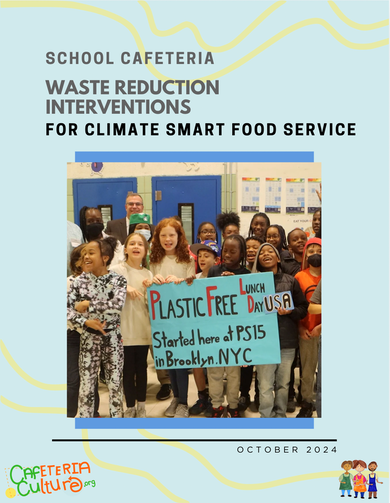
Cafeteria Culture’s ground-breaking project leveraged classroom curriculum, student-led campaigns, waste audits, and video to dramatically reduce single-use plastics (SUPs) and food waste in a NYC public school cafeteria. The team implemented a series of innovative, cost-effective waste reduction interventions, centering student leadership and student voices in our School Cafeteria Waste Reduction Interventions for Sustainable School Food Service project at PS 15 Patrick F. Daly Magnet School of the Arts Elementary School from January 2022 to December 2023.
Key Findings from extensive pre-intervention (baseline) waste audits and careful observations include:
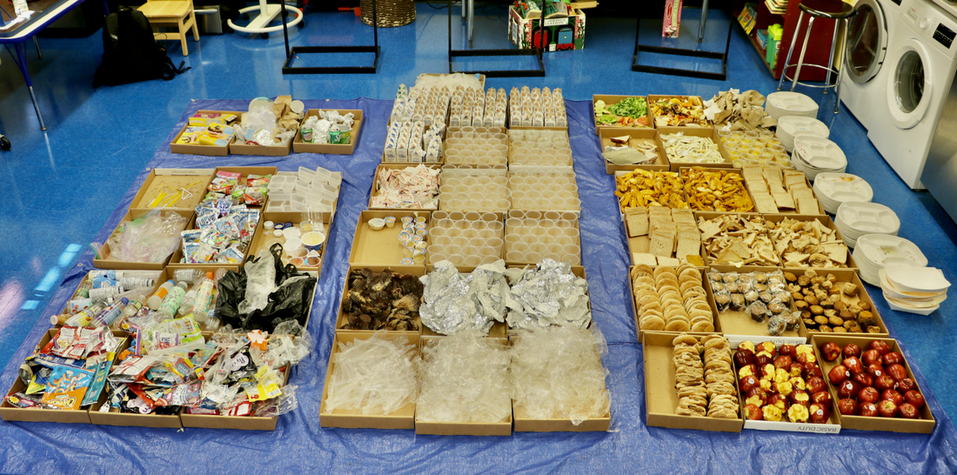
These key findings shaped our three interventions:
1. Plastic Free Lunch Day (PFLD) intervention to target food packaging
2. Reusables Intervention to target foodware (utensils and cups)
3. Mindful Choice Meals (MCM) intervention to target food waste (post-served plate waste)
Previous studies on plastic and food waste in schools have largely examined these issues in isolation. Our interventions, however, explored the connection between the two, demonstrating that a reduction in plastic packaging correlates with a decrease in food waste and vice versa:
Recognizing the interdependence of these two factors is crucial for designing effective, scalable interventions.
In keeping with our teaching and community engagement philosophy, we amplified the voices of students and school stakeholders throughout the program. Together with students and staff, the CafCu team co-designed interventions tailored to the community’s needs. We were honored to collaborate with PS 15 students, including students of varying abilities with challenging backgrounds, to develop student-driven solutions.
We conducted extensive baseline and day-of intervention waste audits to assess the efficacy of our interventions. This critical data informs procurement, menu planning, and procedural decisions for NYC Public Schools, leading to plastic and food waste reduction at the source — thus reducing costs.
The success of these interventions brings the largest school district in the country one step closer to Zero Waste School Food Service and creates a scalable model of student-led, real-world solutions for other schools and school districts to replicate nationwide.

Started at PS 15 with CafCu students as a one-day intervention, PFLD scaled to 750 NYC public elementary schools, reaching an estimated 400,000 students monthly. 16 NYC PFLDs to date have eliminated about 13.2 million plastic items from the waste stream.

With the invaluable previous Urban School Food Alliance partnership, PFLD has been transformed into a national biannual event, open to any school that wants to participate. To date, more than 3,000 schools in 36 states and the District of Columbia have participated in a PFLD event and the number of participating schools grows with each event.

The Reusables Intervention – which introduced reusable cups, utensils, and a satellite dishwashing service – combined with PFLD led to a 99% reduction in plastic waste (excluding milk cartons and trays), a 14% reduction in food waste and a 26% increase in food consumption per student.

This plate waste intervention led to a 50% reduction in food waste weight per student and a 46% increase in the amount of food weight consumed per student by following the USDA’s Offer vs Serve provision to reduce unwanted food. MCM prevents adults’ overplating, and encourages students to make their own choices.